What is Agroecology?
Agroecology is farming with nature – not against it – to produce healthy food while protecting the land, supporting farmers, and connecting producers and consumers. It means growing and providing nutritious, diverse foods and feeding communities in a way that ensures fairness, strengthens resilience, and sustains the planet. Quite a lot to ask!
But the current industrial food and farming systems are not fit for purpose.
What’s wrong with the current food system?
While current food systems face major environmental, climate and health challenges, they are responsible for one-third of global greenhouse gas emissions and for nearly 80% of biodiversity loss. They are often chemical-dependent monocultures which makes them vulnerable to disease and unforeseen shocks.
These practices also contribute to forest destruction, the displacement of communities, social inequalities, water pollution, soil degradation.
The precarious livelihoods and social inequities, faced by many farmers and food system workers, in particular women, Indigenous Peoples and youth, exacerbate the difficulties in ensuring adequate nutrition for all.
Agroecology is more than a farming method – it is a global movement for food systems that are fair, local, democratic, and rooted in care.
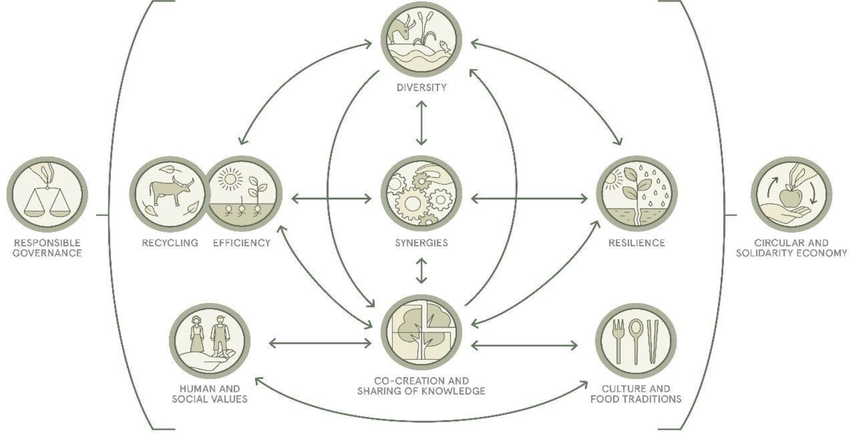
The 10 Elements of Agroecology
The Agroecology Principles and Elements designed by the Food and Agriculture Organization of the United Nations can apply to all forms of sustainable agriculture and food production systems, including crops, livestock and pastoral systems, agroforestry, fisheries and aquaculture. They also apply to food processing, commercialization and consumption. Applying these principles also contributes to improving gender equality, making agriculture more attractive for youth, creating dignified income and living conditions, and contributing to healthy diets.
These Principles and Elements promote resilience, economic viability, social acceptance, cultural diversity and efficiency while protecting the environment. Thus, they help to inform and guide decisions and ensure to avoid siloed interventions, unintended consequences, and short-term solutions.
Checkout this interactive pdf from the Agroecology Coalition
Agroecology Resources: